
Acanthasia
2020
Acanthasia

Coral reefs, known as the rainforests of the sea, are home to 25% of earth’s marine species, provide food to over 500 million people in 100 different countries across the world, and have a global economic value of $375 billion per year. Due to rising sea temperatures and increasing carbon dioxide levels in the water, 25% of the world’s coral reefs have been damaged beyond repair. A further 50% of the remaining coral formations are expected to be destroyed by 2030, and nearly every single coral reef in the world will be in danger by 2050. With the hope of motivating engineers to save coral reefs while some are still alive, UFCC aims to highlight the extent of coral destruction and the natural beauty of living coral reefs. To sustain Earth’s coral reefs, scientists rely on coral nurseries to help replenish species and restore reefs. Located 9,082 miles away from the University of Florida, researchers in the Philippines are uniquely utilizing concrete toward this end. Their project, named Acanthasia, consists of a pre-cast concrete substrate designed to shelter growing corals and allow light to reach their surface. The designers of Acanthasia found concrete to be the ideal building material as it is not only strong enough to provide a robust framework capable of resisting ocean conditions, but also conducive to coral growth due to its low acidity and presence of calcium-bicarbonate. Just as concrete has a vital role in the development of infrastructure for humans, it is now essential for restoring and creating coral formations.
Take a Closer Look....


DIMENSIONS
STATS
STRENGTH
2000 psi * (7-Day Strength)
ReINFORCEMENT
Primary Reinforcement: Leno-Weave Carbon Fiber
Secondary Reinforcement: Polypropylene Microfibers
Meet the Team!

Aiden Kittelson
Project Manager

Senuki Perera
Project Manager

Maddie Foster
Visual Captain

Audrey Hunt
Visual Captain

Sophia Maldonado
Visual Captain

Emily Einheit
Hull Captain

Austin Edwards
Hull Captain

Carson Edwards
Hull Captain

Emma Baumann
Construction Captain

Darius Lee
Construction Captain

Emily Steyer-Mader
Construction Captain
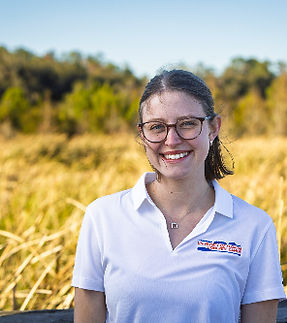
Mariana Templeton
Mix Captain

Kate Pollard
Mix Captain

Kyle Keene
Mix Captain

Gabriella Zweier
Structural Analysis Captain

Matheus Broder
Structural Analysis Captain

Keegan Wittke
Paddling Captain

Ginger Arnold
Material Research

Zelli Pych
Durability Lead

Joel Maas
Curing Development

Markella Stavrinakis
Marketing Lead

Ashton Dampier
Communications Lead

Yash Patel
Events Coordinator

Max Milder
Partnerships Manager

Dylan Magana
Financial Manager
Technicians
Mix: Jack Finneran, Jessica Cormack, and Luke Gundersen
Construction: Edward Collins, Nola Quinn, and Waldy Nevelus
Hull: Ciara Vedova, Juan Lopez, and Yash Patel
Visual: Tanner Rave, Ema Longoria, and Zipporah McNeill
Structural Analysis: Ethan Faerman and Luka Markoski
Admin: Caroline Byrd, Rafaella Savio de Araujo, and Trent Bolinger